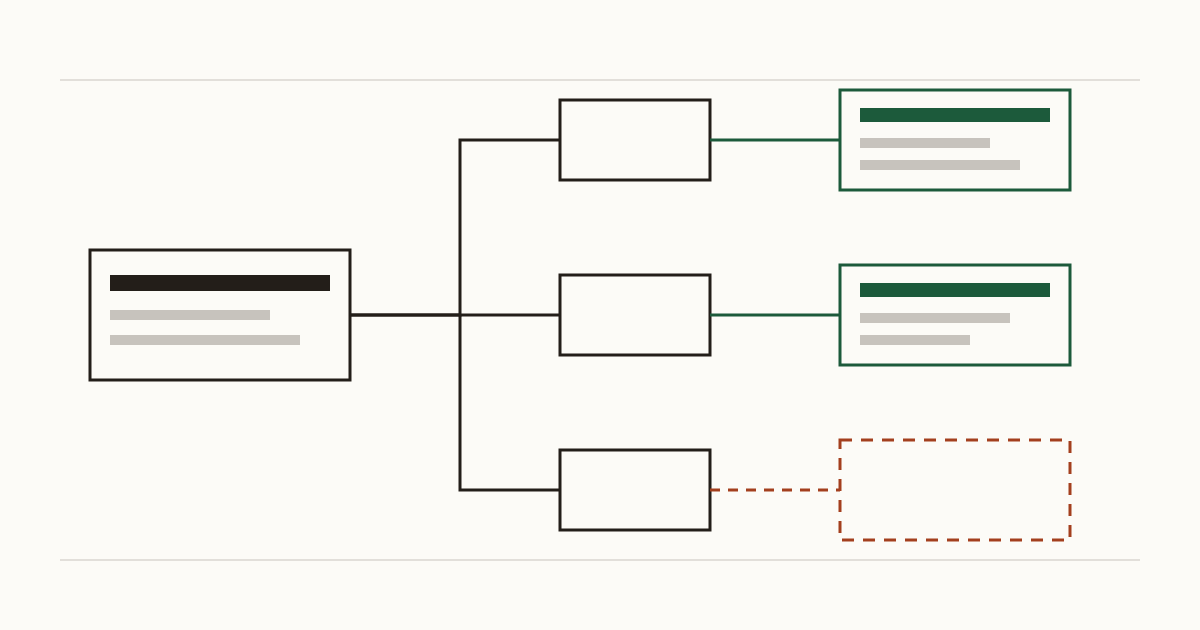
A florist opened a Christmas shop in 2022 on a hosted shop platform and put it at shop.theirname.co.uk. January came, the plan was cancelled, and the shop went dark. Nobody touched the address. It still points at the platform, waiting for whoever claims that spot next.
At Cents Security we check business websites from the outside and price each problem in money lost a month. This one costs nothing while it sleeps. The cost starts the day a stranger notices it, and people look for these on purpose, with tools built to find them.
What a subdomain is, in plain words
Your domain is the name you pay a registrar for. A subdomain is any name you put in front of it: shop., book., blog. You don't buy them. You add a line at the registrar that says where each one goes.
That's why they pile up. A booking page from one year, a landing page for a spring offer, a blog your nephew set up on a free host. Each was one line, added in five minutes by whoever was helping at the time. Nobody writes them down.
How a subdomain takeover happens
The line for shop. is usually a CNAME: a pointer that says "for this name, ask that service". When you close your account with the service, the pointer stays. Your registrar doesn't know you left.
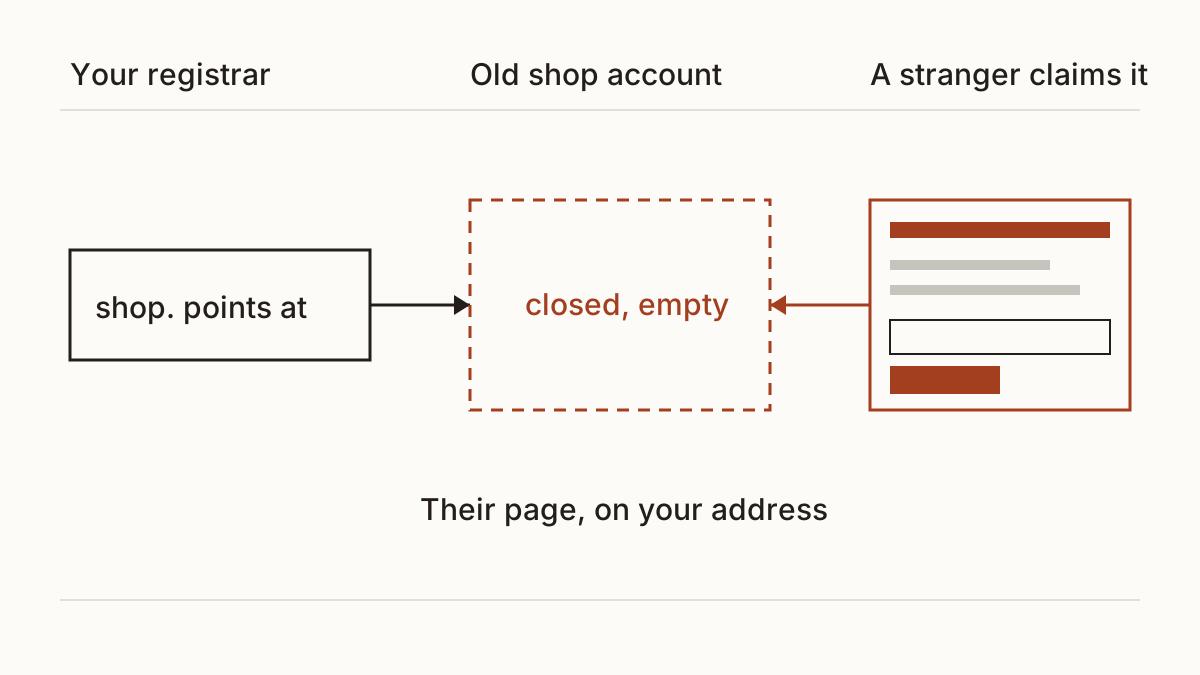
So the name now points at an empty spot on someone else's platform. Many platforms let any new customer claim a name that nobody holds. A stranger signs up, says "I'm shop.theirname.co.uk", and the platform starts serving their page on your address. No password of yours was guessed and no server of yours was touched. That's what makes a subdomain takeover so cheap for them: the platform does the hosting, and your name does the convincing.
The gap can sit open for years. Nothing breaks on your main site, nothing emails you, and the old address shows a plain error page that nobody visits until somebody claims it.
What it costs you
The page someone puts there carries your name in the address bar. That's the whole point for them. It might be a fake shop taking card payments, or a login page asking your customers for passwords. It might be a phishing page sent in emails that look like yours, with a link the customer checks, recognises and clicks.
Your customers trust that address because it's yours. They have no reason not to. We don't put a pound figure on this one, because the loss depends on what the stranger does with it, and we won't invent a number.
There's a second cost. Browsers and search engines keep lists of addresses that host scams, and a flag on a subdomain can drag warnings onto the rest of your domain while you sort it out. For a shop that takes orders online, a red warning in front of the real checkout is the part that shows up in the till.
How to find the subdomains you have
You can't see the list from your own website. It lives in two places: the settings at your registrar, and the memory of everyone who has helped with the site.
Read your DNS records at the registrar
Log in where you pay for the name and open the DNS page. Every line there is a name and where it goes. Look for any line marked CNAME whose target is a service you no longer use, such as a shop builder or a free host. If a name means nothing to you, write it down rather than delete it on a guess.
There's a second list most owners don't know about. Every padlock certificate issued for a name under your domain goes into public logs, and a free search such as crt.sh shows them. Old names turn up there long after everyone has forgotten them.
Our paid scan reads where the address you give us points, and checks whether the service at the other end still answers. Paste shop.yourname.co.uk into the scan box and it reads that one. The page listing every check we run, in plain words says what we look at and what we can't see from outside.
Ask whoever built the old pages
The developer or agency who set up the booking page will often remember names you've never seen. Ask them one question: "Which names under our domain did you point anywhere, and are those accounts still open?"
Closing the gap
You've two ways out. If you don't need the page any more, delete the line at the registrar. With no pointer left, a stranger has nothing to claim, and the change usually takes effect within a few hours.
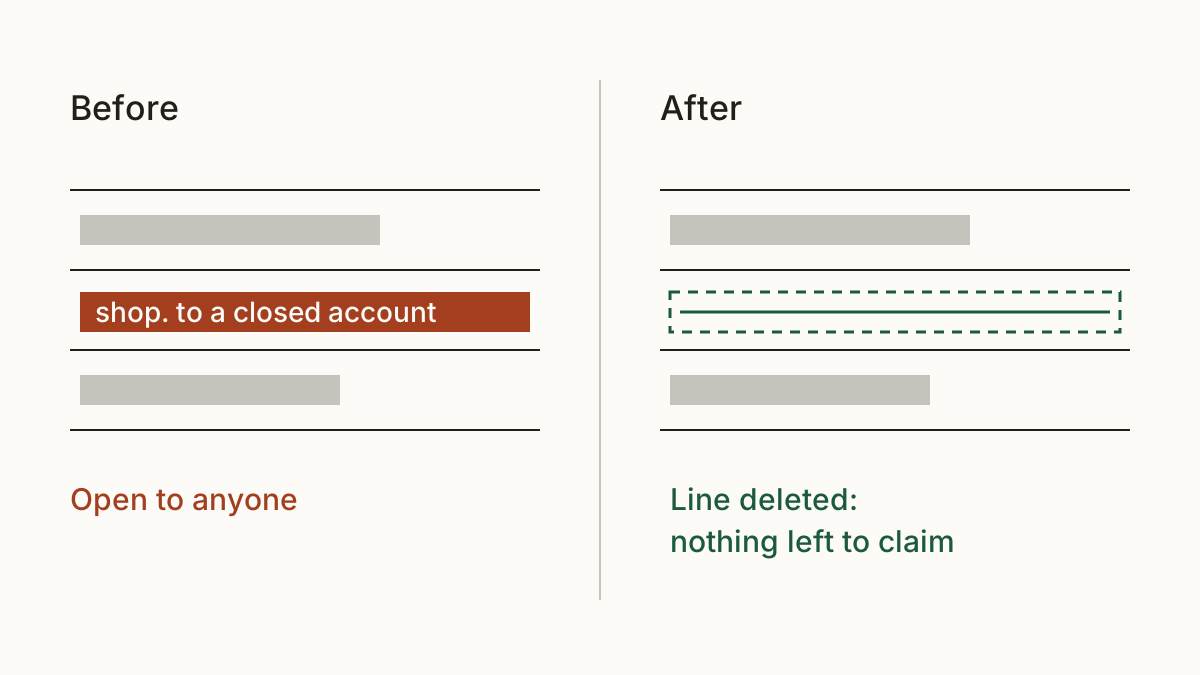
If somebody else has already claimed it, the order matters. Delete the line first, which takes your name off their page within hours. Then report the page to the platform it's hosted on. We'd rather you didn't try to reopen the old account first: it can take days and the page stays live meanwhile.
Who removes the record, and what to send them
Whoever holds the registrar login removes the record. Often that's your developer. Sometimes it's an agency you left years ago, which is the case worth chasing first. If you're not sure who holds the name, our piece on what happens when a domain expires shows how to find out.
Here's a message you can forward as it is:
"Please check the DNS records for our domain and delete any CNAME that points at a service we no longer use, starting with shop. Don't change the MX, TXT or _domainkey lines, which carry our email. Tell me which lines you removed."
FAQ
Does this affect small businesses or only big companies?
Small businesses too. The stranger isn't choosing you by size: they look for any old subdomain that points at an empty spot, and a florist's shop page works as well as a bank's. Smaller firms tend to have fewer names, so the check is quicker.
Will deleting an old record break my email?
Not if it's the right line. Email runs on the MX and TXT lines, and on the _domainkey names, not on shop. or book. Deleting an old subdomain pointer leaves all of those alone.
Check your website with us and see what each problem on it costs you a month.