It's a Tuesday and your inbox has gone quiet. Even the usual spam has stopped. By lunchtime a customer rings to say their email to you bounced, and when you open your own website, the browser can't find it. Somewhere, at a registrar you've half forgotten, a card on file ran out last month and the renewal reminder went to an address nobody reads.
At Cents Security we check business websites from the outside and price each problem in money lost a month. When a domain name expires, it's one of the few problems we find that takes everything down at once, and it's one of the cheapest to prevent.
What stops when a domain name expires
Two things stop, and they stop together. Your website goes first in most people's minds, but email is usually the bigger loss. Your address at your own domain depends on the same name, so when it lapses, messages sent to you bounce back to the sender with an error. The customer who wrote to book a table or ask for a quote doesn't know why. They try the next business on the list.
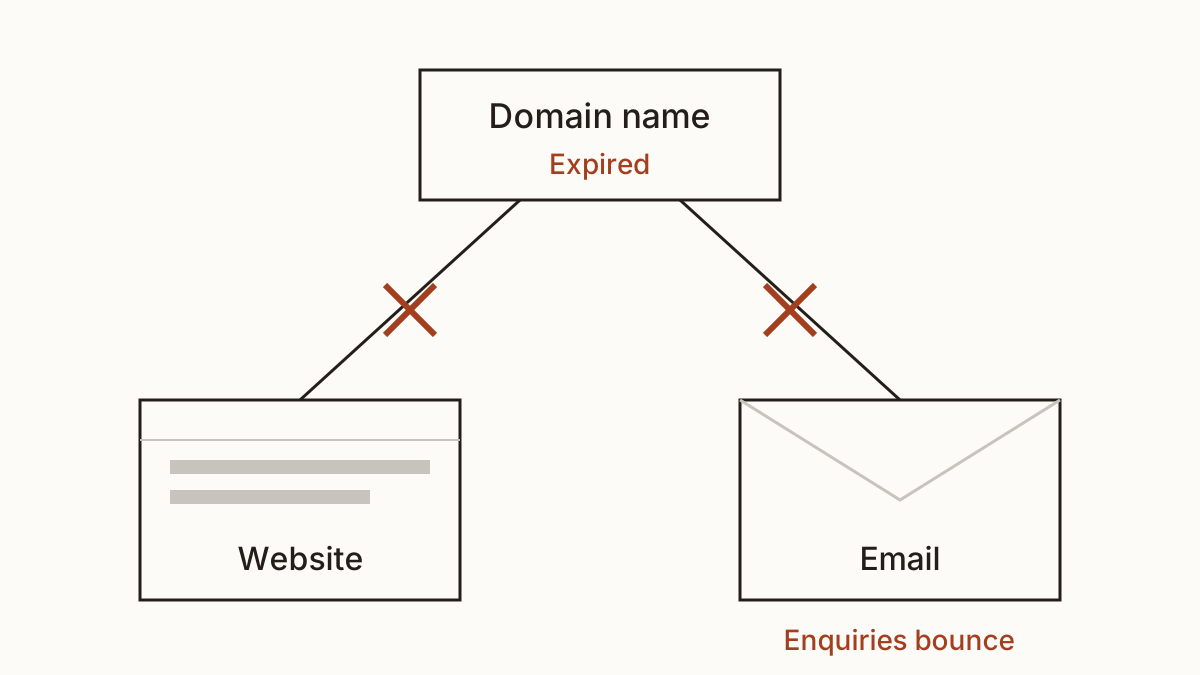
We'd rather you think of the cost in enquiries than in pounds for the name. A renewal is a small annual bill. A week of bounced email in your busy season is not. For a clinic or a trades business that takes most bookings by email, every bounced message is likely an enquiry that went to someone else.
Who actually holds your domain
Ask most owners where their domain is registered and they'll name their web designer. That's often the honest answer: the developer who built the site bought the name on their own account, or an agency you left years ago still has it. The domain works fine until their card changes, they close the account, or they stop answering.
You can look it up. A WHOIS lookup for your domain shows the registrar, the expiry date and, for most UK names, little else, because personal details are hidden. The registrar is the company you'd contact. The expiry date is the one to write in your diary today.
Our scan reads the public records for your name, and the page listing the checks we run on your domain says what we look at in plain words. If the registrar on file isn't one you have a login for, that's the first thing to sort.
Turning on domain renewal you can't forget
Renewal fails for boring reasons, so the fix is boring too. You want the payment to go through without anyone remembering, and the warning to land somewhere a person looks.
Auto-renew, and a card that won't lapse
Log in at your registrar and switch on auto-renew. Then check the card on file. A card that expires before the renewal date is a common way a domain slips. Auto-renew tries the old card and fails. Then the registrar sends an email about it.
Use a company card that's renewed on time, or set a reminder for the month before it expires. We'd renew for two or three years at once, because it cuts the number of times this can go wrong.
A billing email somebody reads
The registrar's warnings go to the billing email on the account. If that's a former developer's address or an inbox you closed, every reminder goes nowhere.
Change it to an address you check daily, ideally one that isn't at the same domain. If the domain lapses, email at that domain stops too, and so would the warning about it. So a separate address is safer for domain renewal notices.
The registrar lock, and why it matters
A lock at the registrar stops your domain being moved to another company without you. It's one setting, usually called transfer lock or domain lock, and most registrars switch it on by default. Check it anyway.
Without it, someone who gets into your registrar account, or talks a support agent round, can start a transfer. Once the name sits at another registrar, getting it back is slow and out of your hands. The lock adds a step they can't skip. It doesn't replace a strong password and two-factor login on the account, so we'd turn those on in the same visit. An agency looking after 30 client sites should do this on every account it holds, not only its own.
If it has already expired
Act today. Most registrars keep an expired name for a short grace period in which you can still renew, sometimes with a late fee. How long that lasts depends on the registrar and the ending (.co.uk and .com differ), so log in and check your account rather than wait for a fixed number of days.
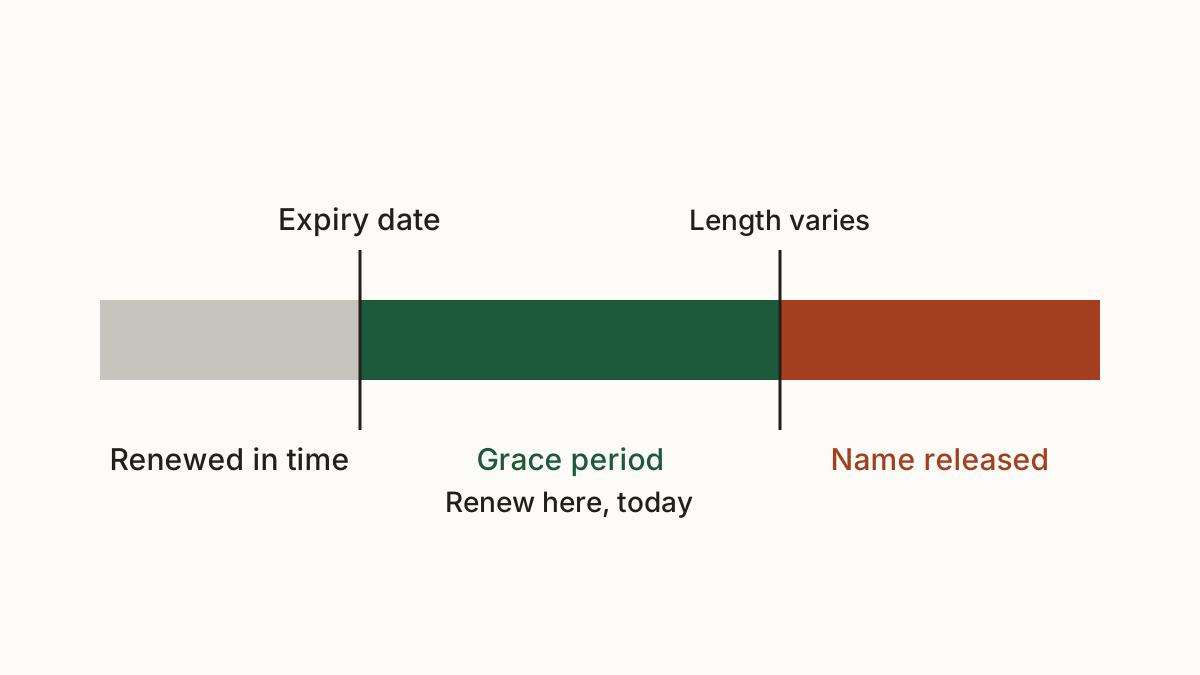
Renew first, then check the nameservers haven't changed and test your email by sending yourself a message from another address. Then check your website to see what else the outage left behind.
FAQ
Can someone buy my domain if it expires?
Yes, once the grace period ends and the registrar releases it. Names with traffic and links get picked up quickly, sometimes by people who then offer to sell them back.
How far ahead should I renew?
At least a month before the expiry date, and we'd renew for several years at a time. That leaves room for a failed card to be noticed and fixed.
Do I own my domain if my web designer bought it?
Log in at the registrar, or ask it: the name on the registration is the registrant. If that's your designer or their company, ask them to transfer it into an account in your name. For anything contractual, check with a solicitor.
Check your website with us and see what each problem on it costs you a month.