Picture a customer who bought a lamp from your shop on a Sunday night and wants to send it back on Thursday. They don't need your permission. In the UK, most people who buy at a distance can change their mind, and the law decides that, not your website. What your site decides is whether the customer knows the rules before they pay. That's the part we find missing most often when Cents Security checks a small shop.
The right to cancel exists whether you mention it or not
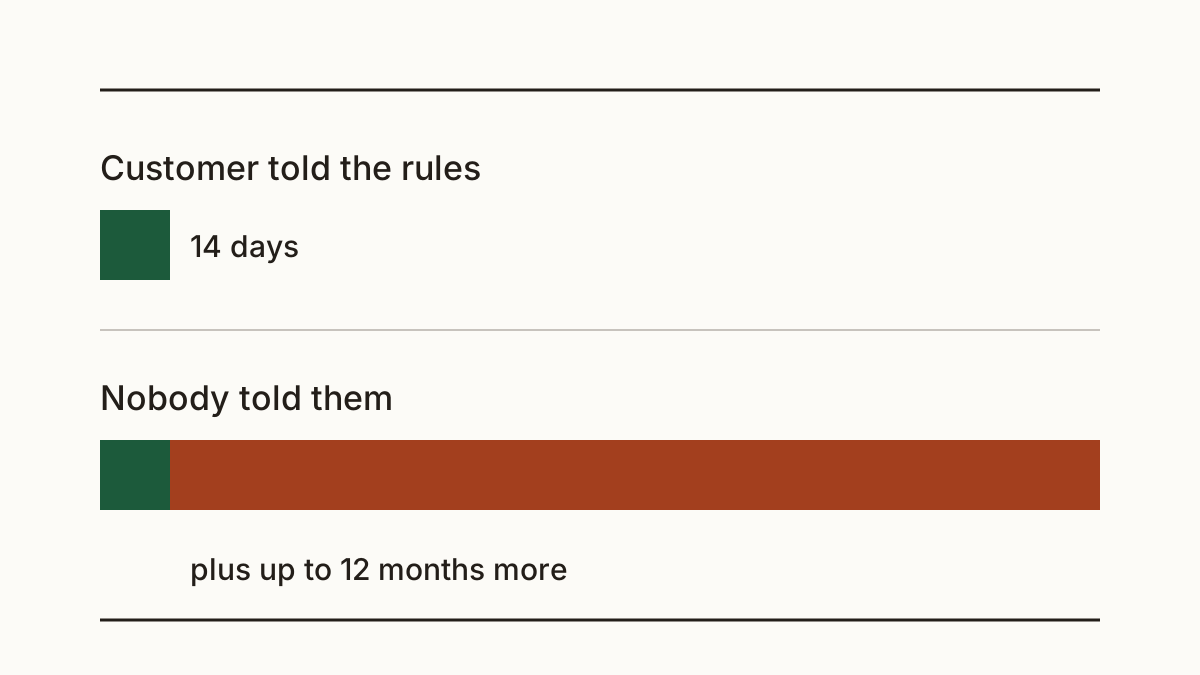
For most goods and services sold online or over the phone, the customer can cancel within 14 days without giving a reason. That comes from the Consumer Contracts Regulations (the 2013 regulations on information, cancellation and additional charges), and GOV.UK's guide to online and distance selling sets it out in plain terms. For goods, the clock usually starts the day after the customer receives them. For services, it starts the day after the contract is made.
Plenty of owners we talk to think the right only applies if their own terms grant it. It doesn't work that way. You can't switch it off, and keeping quiet about it doesn't remove it. Silence only stretches it.
What staying silent costs
If you don't tell the customer about their right to cancel before the contract, the cancellation period doesn't end after two weeks. It can run up to 12 months longer (regulation 31). So a customer could, in principle, send back something they bought last spring and expect their money.
Services are a different animal. Say you didn't give the cancellation information, or you started work inside the cancellation period without the customer's express request. Then you may not be able to charge for the work you've already done. Picture a dog groomer who takes online bookings. Or a web designer selling a fixed-price package: the hours are spent, and the invoice may not stand.
Neither cost shows up on a dashboard. We'd call it a slow leak: it arrives later, as a return you can't refuse or a bill you can't collect.
What a refund policy should say
A good refund policy is short, and it answers what a customer wonders about before they press Pay. We'd put these in it:
- How long the customer has, and when the 14 days start for goods and for services.
- How to tell you they're cancelling. An email address works, and GOV.UK publishes a model cancellation form you can offer too.
- Who pays return postage. If you want the customer to pay it, say so up front, otherwise it falls on you.
- When the money goes back, and that it goes back by the payment method they used.
Write it in your own words. We often see a page copied from a much bigger retailer that promises free returns the owner never offers, and customers will hold you to it.
What is usually exempt
Some purchases sit outside the right to cancel. Made-to-order or personalised goods are the usual example: a ring engraved with a name can't be resold, so the customer can't return it because they changed their mind. Perishable goods like flowers are normally exempt. Sealed hygiene items, such as cosmetics, lose the right once the seal is broken. And digital downloads stop being cancellable once the download has started, but only if the customer agreed to that and acknowledged losing the right.
The full list has more entries and conditions attached, so check GOV.UK's current list against what you sell. We don't give legal advice, and exemptions are where ten minutes with the official guidance pays off. Faulty goods are a separate matter. Those rights stay whatever you sell.
Where to put it
Give it a page of its own and link it from the checkout and the footer. Then repeat the key points in the order confirmation email. People underrate that last step: the rules want the information on a durable medium, and an email the customer keeps does that.
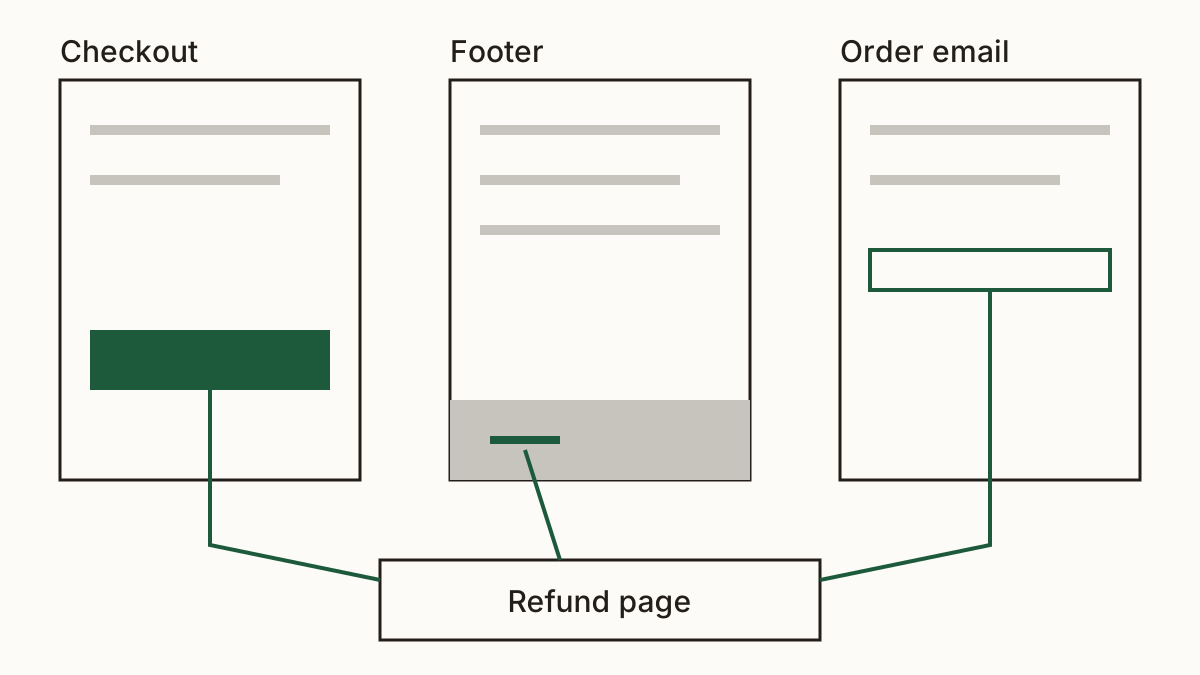
Our scan reads your pages the way a customer sees them, and it looks for any mention of refunds or cancellation on a page that takes payment. So you can check whether your payment pages mention refunds before a customer, or trading standards, finds the gap.
Who writes it
Usually you do. In our experience a shop owner can write a sound policy in under an hour from GOV.UK's guidance, because the rules are the same for most online shops. Your web designer or agency then adds the page and the links.
When should you pay a solicitor? When you sell something unusual, like subscriptions with a free trial, or services that begin inside the cancellation period. Those are the cases where a wording mistake costs more than the advice.
FAQ
Can I say 'no refunds' on my site?
No. For most online sales the customer has a legal right to cancel, and for faulty goods they keep their statutory rights whatever your site says. A "no refunds" line misstates those rights, which is the kind of thing trading standards take up, and a customer reading it at checkout may well close the tab.
Does this apply to services I sell online, like bookings?
Mostly, yes. Services sold online carry the same right to cancel, though bookings for a set date, such as a hotel room or event tickets, are often exempt. If a customer asks you to start straight away and then cancels, you can usually charge for the part already provided.
Do I need terms and conditions as well?
We'd recommend it, and most shops keep the refund rules in a section of them. Having a terms and conditions page gives you one place to say who you are and how delivery works. Keep the refund part easy to find on its own too, since that's what customers look for first.
Check your website at https://www.cents-security.com/ and see what each problem on it costs you.