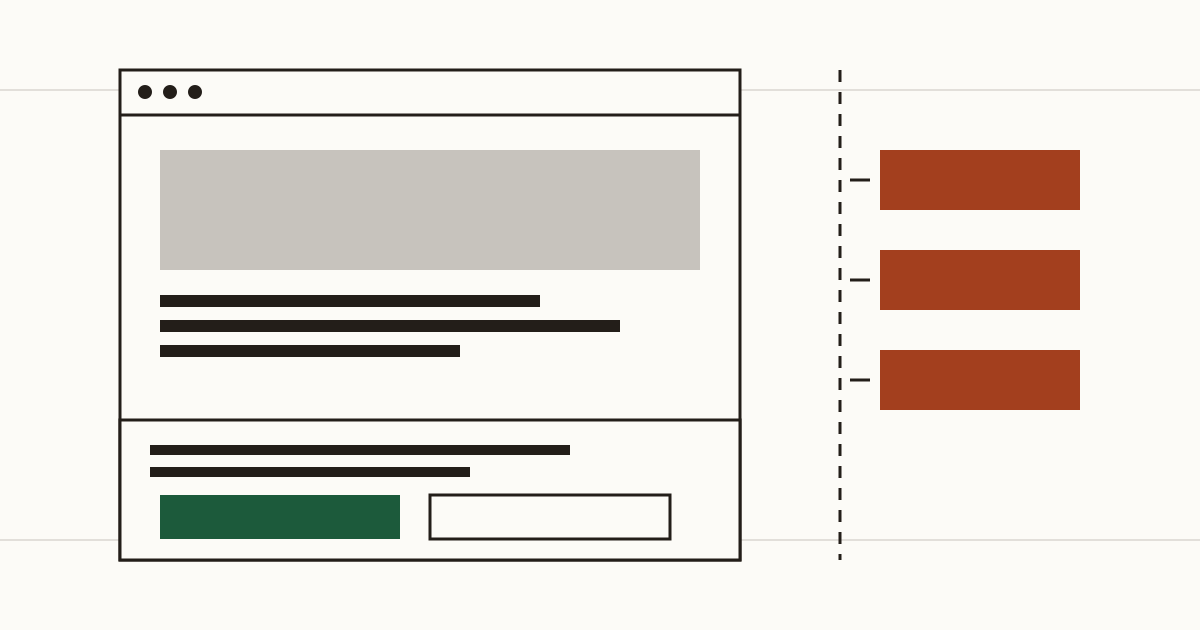
Maybe a developer added a cookie banner to your site years ago and nobody has looked at it since. Maybe you never had one, because the site only shows opening hours and a booking form. Either way, the rules moved this year, and the question "do I need a cookie banner" has a slightly different answer than it did. At Cents Security we cite the regulations and the ICO's guidance, and we don't give legal advice. So treat what follows as a map, and check the current guidance before you change anything.
Anyone can see your tracking start before they agree
Regulation 6 of PECR (the Privacy and Electronic Communications Regulations) says you may not store or read information on a visitor's device unless they agree or an exception applies. Everything else in this area hangs off that one rule, banners included.
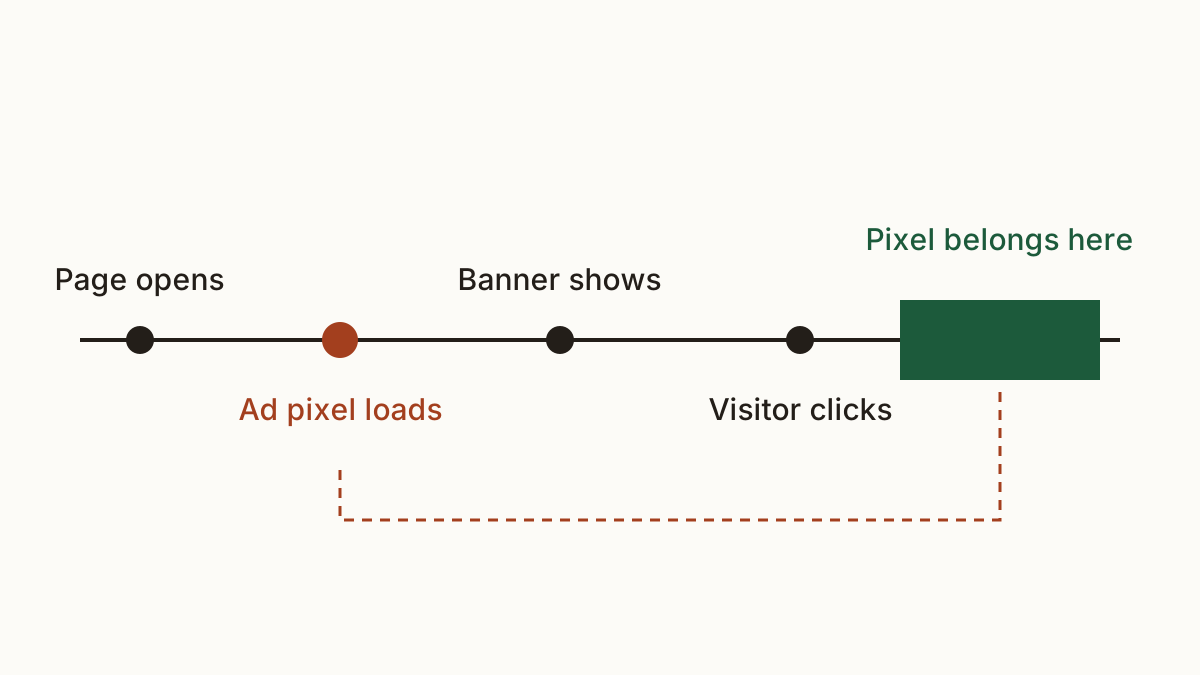
And it's easy to test from the outside. Anyone can open your homepage, press F12 and watch an advertising pixel load before your banner has even finished drawing. A competitor can. So can a customer who's annoyed with you, or the solicitor they ring. Among the checks we run for a regulator is one that looks for tracking which runs with no consent banner we recognise. We click nothing on your site, though, so we can't tell whether a banner you do have holds the tags back. We report what loads, and you or your developer confirm the rest.
What changed in UK cookie law on 5 February 2026
The Data (Use and Access) Act 2025 rewrote regulation 6 and moved its exceptions into a new Schedule A1 to PECR. That part came into force on 5 February 2026. The ICO has since finalised its guidance on storage and access technologies, last updated on 29 April 2026. We'd read it before touching your tag manager, because the detail matters and the guidance can change again.
Analytics that can run without asking, if it meets every condition
There's now a statistical purposes exception. It covers analytics whose only purpose is producing statistics to improve your site. The data can't be shared except to help with that. If a third party provides the analytics, the ICO says they must act as your processor. And the ICO says it can't be used to monitor or track individual visitors.
You also have to give clear information about it and a simple, free way to object. Miss one condition and the exception doesn't apply. We won't tell you whether a particular analytics product qualifies: that depends on how it's set up on your site, not on its name.
Settings that change how your site looks or works
A second exception covers storage that adapts how the site looks or works to a visitor's preferences, such as a remembered language or a larger text size. The same clear information and free way to object apply. The ICO says this isn't about choosing which content to show someone, so a recommendations engine doesn't get in this way.
Advertising and anything that follows one visitor still needs a yes
The ICO is blunt here: online advertising purposes are not exempt from PECR's consent requirements, and never have been. So the ad pixel from your last campaign waits for consent. A session recording tool that replays each visitor's clicks waits too.
When you can do without a cookie banner
Some sites really don't need one. If every cookie you set is strictly necessary, like a shopping basket or a sign-in, and any analytics meets every condition above, there's nothing to ask permission for.
But the analytics and appearance exceptions only apply when you give clear information. So even without a banner, you still need a cookie policy that says what runs and how to opt out. On a site with no banner, that page is where the clear information lives, so it can't be an afterthought.
A banner that lets tags run first counts for nothing
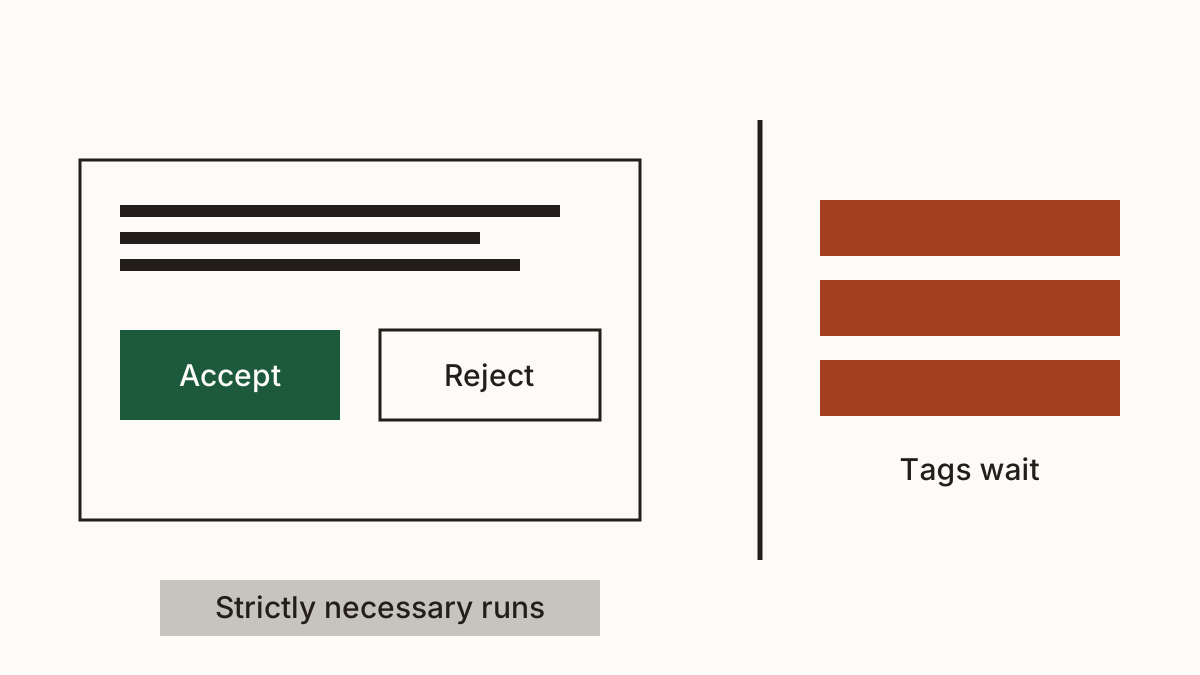
We see this a lot on small business sites: a nice-looking banner, and behind it the tags have already fired. The ICO's position is that consent needs a positive action from the visitor. Silence or inactivity doesn't qualify. Refusing has to be as easy as accepting, which rules out a big "Accept" button next to a "Settings" link buried three screens deep. Every tag that needs consent waits until it's given. Not until the page has loaded, and not until the visitor scrolls: until they click.
Your banner needs a cookie policy behind it
This is a page listing each cookie, what it does and how long it lasts, linked from the banner. You can write it yourself. Your developer can tell you what's set; the wording is yours.
Your privacy policy has to name who receives the data
Article 13 of the UK GDPR asks you to tell people who receives their personal data, at least by category. We think naming each company your tags send data to is the plainest way to do that. If the ad network gets it, say so.
What a cookie complaint can cost you
Since 5 February 2026, the most the ICO can fine a business for breaking regulation 6 is the higher maximum in section 157 of the Data Protection Act 2018, applied to PECR by Schedule 13 of the Data (Use and Access) Act 2025: £17.5 million or 4% of worldwide annual turnover, whichever is higher. The ICO's guidance also says it reserves fines for the most serious infringements and acts in proportion.
So a corner shop isn't facing £17.5 million. On our side, how we price a complaint to the regulator works the same as every other figure we show: a typical cost multiplied by the chance of it happening in a year, then spread over twelve months. Every input sits on that page with its source.
Who fixes your banner, and what to send them
Two people, two jobs. Your web developer makes every tag that needs consent wait for it. You write the cookie policy and add the company names to your privacy policy.
You could forward this: "Our site loads tracking tags before visitors accept cookies. Can you make every tag that needs consent wait for it, and send me the list of cookies the site sets?"
When they say it's done, open the site in a private window and look before clicking anything on the banner. Or scan your website again and see whether the tracking finding has gone.
FAQ
Do I need a cookie banner for Google Analytics?
It depends on the ICO's conditions, not the product's name. If the data goes further than helping you improve the site, or follows individual visitors, it needs consent. Check the current guidance against how yours is configured.
Is "by using this site you accept cookies" enough?
No. The ICO says you can't assume that people who don't engage with your banner have agreed. Cookie consent has to come from a clear action, like a click on Accept.
How do I see what my site sets before anyone agrees?
Open it in a private window, then look at the cookies in your browser's developer tools before you touch the banner. Or run a scan, which reports tags that load with no banner we recognise.
Check your website with us and see what each problem costs you a month.