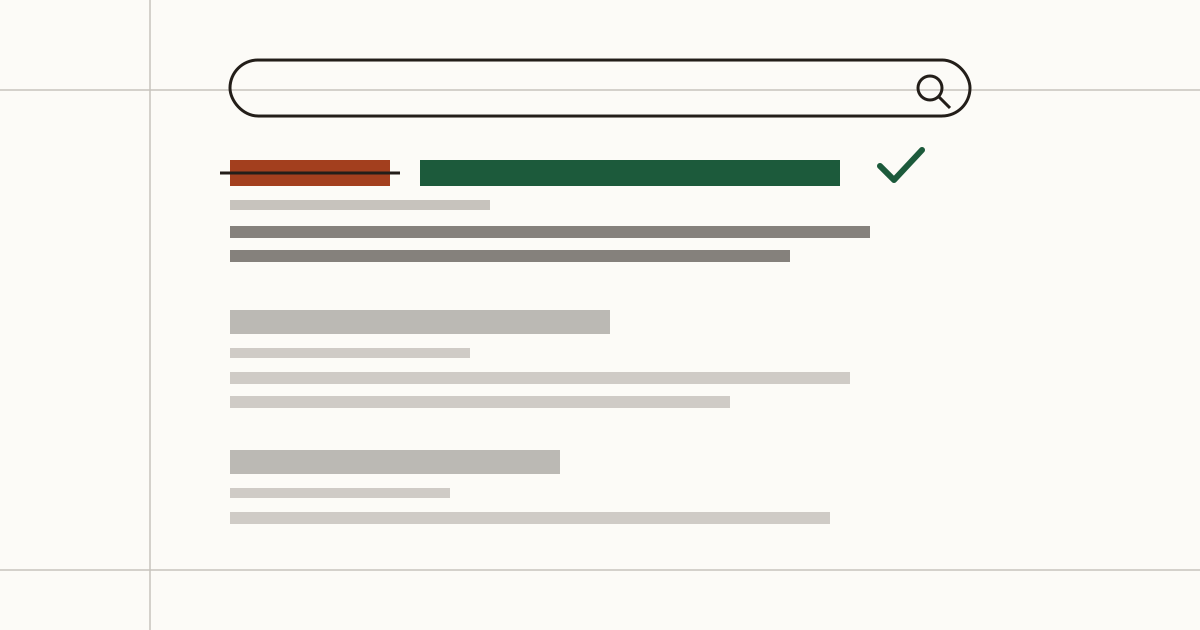
It's a quiet Monday and you type your own business name into Google, expecting "Rosa's Kitchen, Italian restaurant in Leeds". The top result says "Home". Under it, where a line about your food should be, Google has printed the first words it found on the page: "We use cookies to improve your experience." Every customer who searches for you sees the same thing. We see it most on sites built from a template, and it's one of the cheaper problems Cents Security turns up on a scan.
What searchers see before they click
Your result in Google has two parts you can shape. The blue headline is the title link. The grey lines under it are the snippet. That pair is your shop window in search results, and most people decide from it alone whether to click.
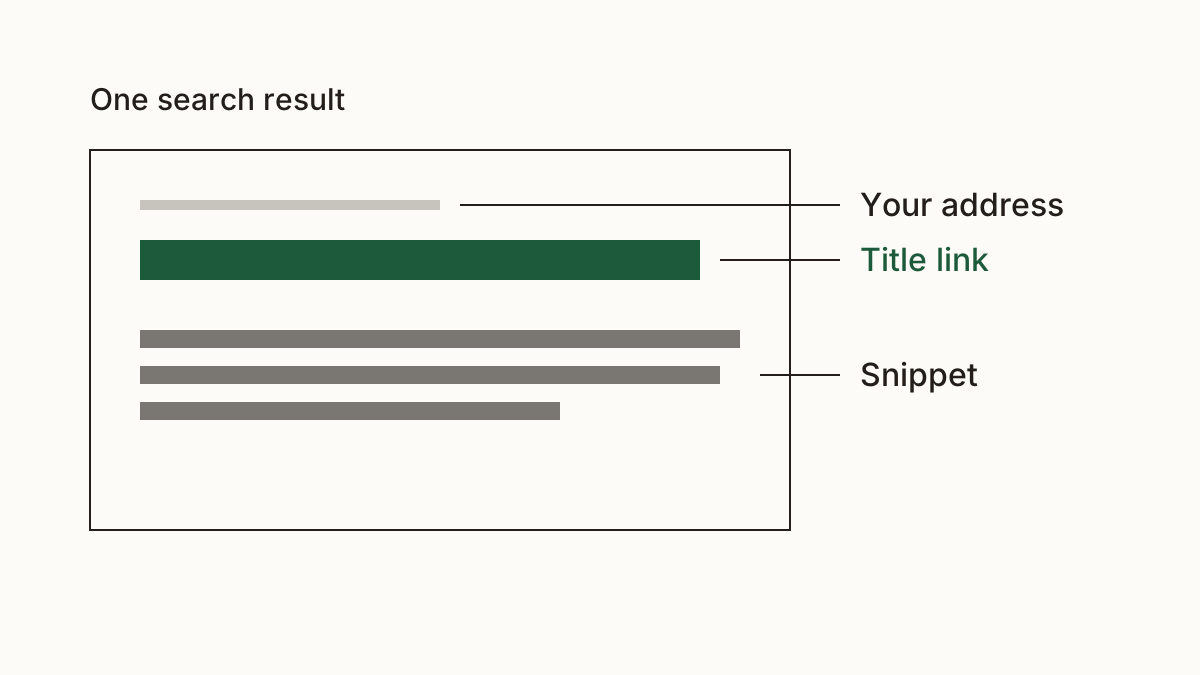
The headline usually comes from the title tag in your page's code, and the snippet often comes from the description tag, a sentence written for exactly that spot. Neither appears on the page itself. So owners rarely notice them until they search for themselves, the way a stranger would.
Why Google rewrites them
Google's own documentation says it may choose other text when yours doesn't describe the page well. In the sites we check, a handful of habits cause most rewrites.
The commonest is a missing tag: Google falls back on whatever text it finds first, and on a lot of small sites that's a cookie banner. Next comes the duplicate, where every page carries "Home" or the bare site name because the theme set it and nobody changed it. Some owners go the other way and cram in "plumber Leeds plumber Bradford emergency plumber", and Google trims it. And now and then the tag describes a page that has moved on, like last winter's Christmas menu sitting on a page that now sells gift vouchers.
So a rewrite is a symptom. Google is filling a gap you left, not punishing you.
What a weak page title costs you
People searching your business name are the warmest visitors you'll ever get. They already want you. When your result says "Home" and quotes a cookie notice, some of them hesitate, and the result just below with a clear name and town gets the click instead.
How many do you lose? We won't guess. Nobody can measure that from outside without your own figures, and invented click-through rates are worse than none. What we will say is that a clear headline costs nothing to write, while a vague one hands a ready customer a reason to look elsewhere in the search results. When we price it on a scan, our method page shows the inputs and the range behind the figure.
How to check your own pages
Start with the search itself. Type site:yourdomain.co.uk into Google, with your own address, and read the list as a stranger would. Any headline that says "Home", repeats your homepage or stops mid-word is worth a second look.
Then open a page and right-click it. Choose "View page source" and search for "<title". An empty tag, or one that's identical on every page, is your cause. Our free scan runs the page title check on your site from the outside and lists the pages that fail it.
Got Google Search Console? Its Performance report shows pages that people see in Google but rarely click. We'd rewrite those first.
How to write a page title and a meta description that get used
One of each per page, written for that page. Our rule of thumb for the headline: business name, place, plain offer, in roughly 50 to 60 characters. The description is a sentence or two saying what's on the page and why someone would want it.
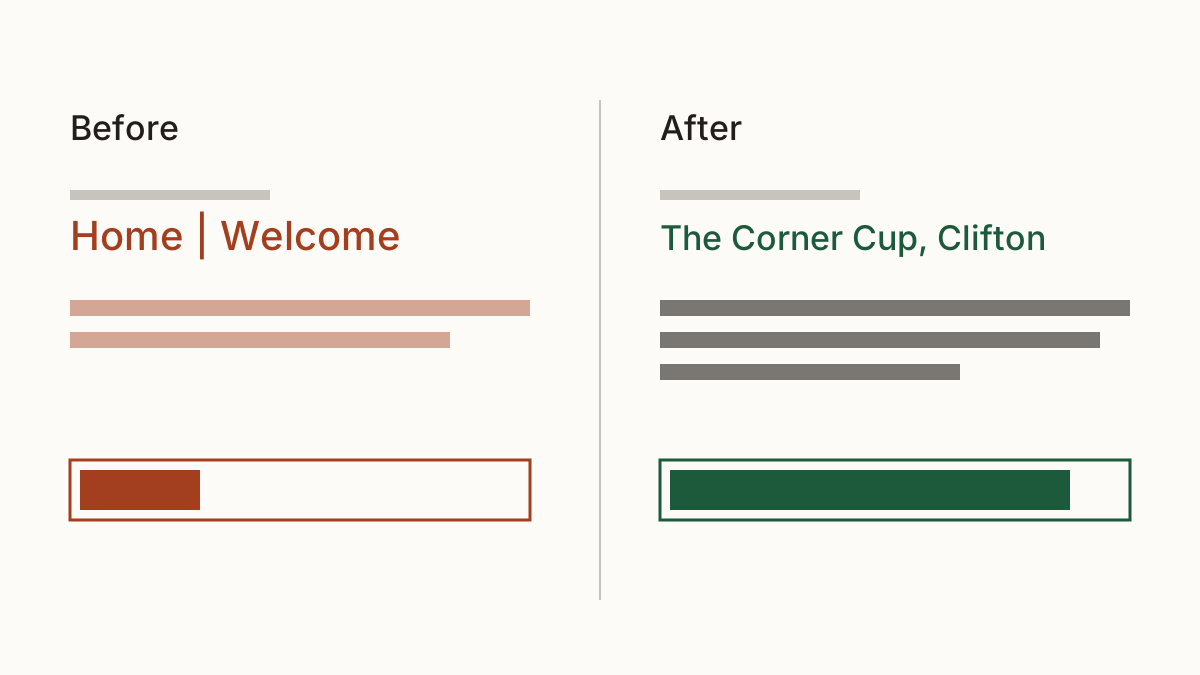
Picture a made-up cafe in Bristol. Before: "Home | Welcome". After: "The Corner Cup, cafe and bakery in Clifton, Bristol". Its description used to be blank, so Google quoted the cookie banner. After: "Fresh bread from 7am and breakfast until noon. Dogs are welcome in the garden at the back."
Write it the way you'd describe the place to someone on the phone. Google tends to keep text like that.
Who fixes it
On WordPress it's usually an SEO plugin such as Yoast or Rank Math: open the page in the editor, scroll down to the plugin's box, and fill in the title and description fields. Squarespace and Wix keep their own SEO settings on each page, a couple of clicks from the editor in your CMS. If a developer built the site by hand, it's a five-minute job for them, and you can forward the list of pages from your scan. Want to know what counts as missing first? You can see what our meta description check looks for.
Our view is that you should write the words, since nobody knows your offer better. The developer or agency should only put them in place.
FAQ
How long should a meta description be?
Roughly 150 to 160 characters fits most desktop results. Google doesn't set a hard limit, and phones show less. We'd rather see one clear sentence than text padded out to the maximum.
Why did Google change my title even though I set one?
Usually because it didn't match the page or read like a string of keywords. Google picks whatever text it thinks describes the page better. Make the title specific to that one page, then look again once Google has revisited the site.
Do meta descriptions help my ranking?
No, Google doesn't use them to decide where you rank. What they change is whether people click your result. That still matters, because a click from a ready customer is the whole point of being found.
Check your website at https://www.cents-security.com/ and see what each problem on it costs you.