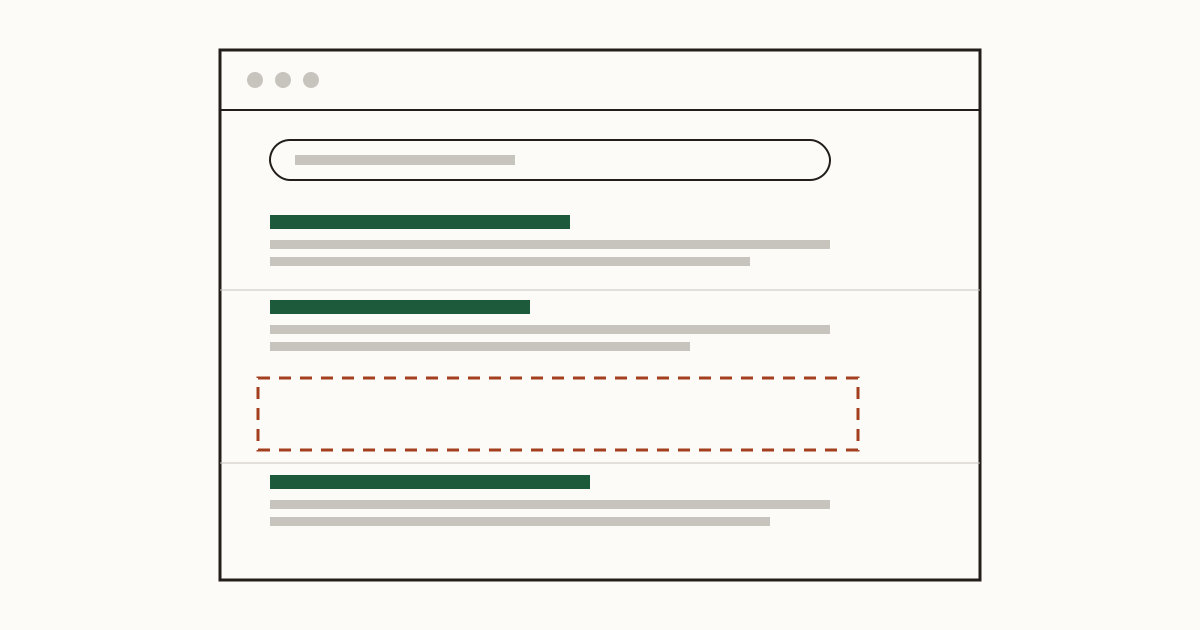
You type your own business name into Google. A directory listing comes up first, then a competitor two streets away, and your own website is nowhere. So you ask ChatGPT for a good cafe on your road and it names somebody else. When a website not showing on Google is the complaint, our first question is what the site itself is telling search engines, because it's often one line that asks them to stay away. We're Cents Security, and we read those signals from the outside, the way a search engine or an assistant does. We can't see where you rank. We can see when your site has asked not to be listed at all.
A leftover noindex tag tells Google to drop every page
Google's own documentation doesn't soften this: a page carrying noindex is dropped from Google Search results entirely, however many other sites link to it. It's usually a leftover from the build. The developer switched it on to keep half-finished pages out of sight. Then launch day came and nobody switched it off. On WordPress the switch is a box under Settings, then Reading, labelled Discourage search engines from indexing this site. Is it ticked? Then untick it and save, which you can do yourself in under a minute. We check for a noindex tag before anything else, because we find it often and removing it costs you nothing.
A robots.txt rule can turn every search engine away
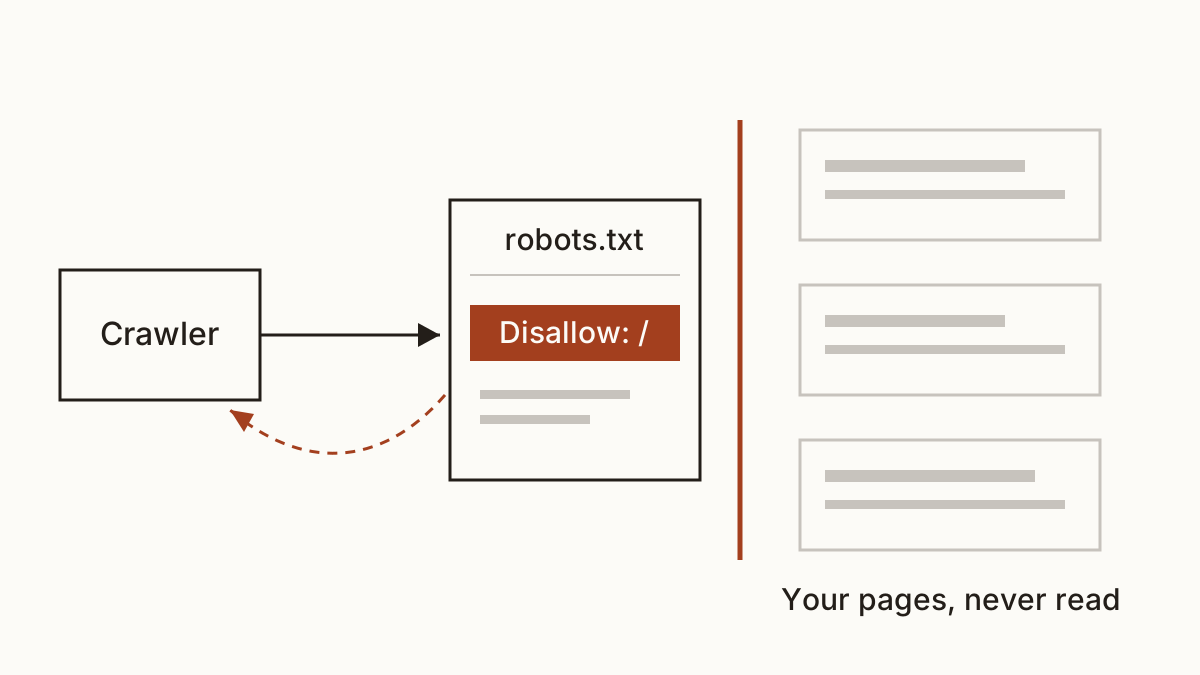
Next we open a small text file at the root of your site. A robots.txt file holding Disallow: / for every crawler tells Google and Bing not to read a single page, and they obey. There's a trap here that catches developers too. Google's documentation points out that a page blocked in robots.txt can't show Google its noindex, because Google never reads the page, so it can linger in results as a bare address with no description. We'd rather you picked one of the two on purpose and knew which it was. Your web developer changes the file.
ChatGPT can't recommend a business it isn't allowed to read
OpenAI runs more than one crawler, and its documentation keeps them apart. OAI-SearchBot is the one that puts sites into ChatGPT's search answers, while GPTBot gathers material for training. The settings are independent. Blocking GPTBot doesn't take you out of ChatGPT search, but blocking OAI-SearchBot does. We look for rules that turn away the search crawlers of ChatGPT, Claude and Perplexity, and many owners with one never chose it. It arrived with a theme or a hosting setting and has sat there since.
Smaller gaps that cost you clicks
None of these hides you completely. Each one takes a slice of the people who'd have clicked, and you can read the checks we run for search engines in plain words if you want the full list.
Pages a few clicks deep go missing without a sitemap
A sitemap lists every page you want found. Without it, search engines mostly find what your homepage links to, so a clinic's treatment pages or a restaurant's private dining menu can sit unseen for months. Your web developer can add one.
Google may write your listing from your cookie notice
No page title or meta description of your own? Then Google picks a line from the page to show in search results, and sometimes that line is your cookie notice. You can write both yourself in most site builders.
Your opening hours are hard for a machine to read
Structured data describes your business in a form a crawler reads directly, down to your phone number and opening hours. Without it, a search engine guesses from the page. So does an assistant, and both guess badly on a Sunday. Your web developer adds it once.
What staying invisible costs you each month
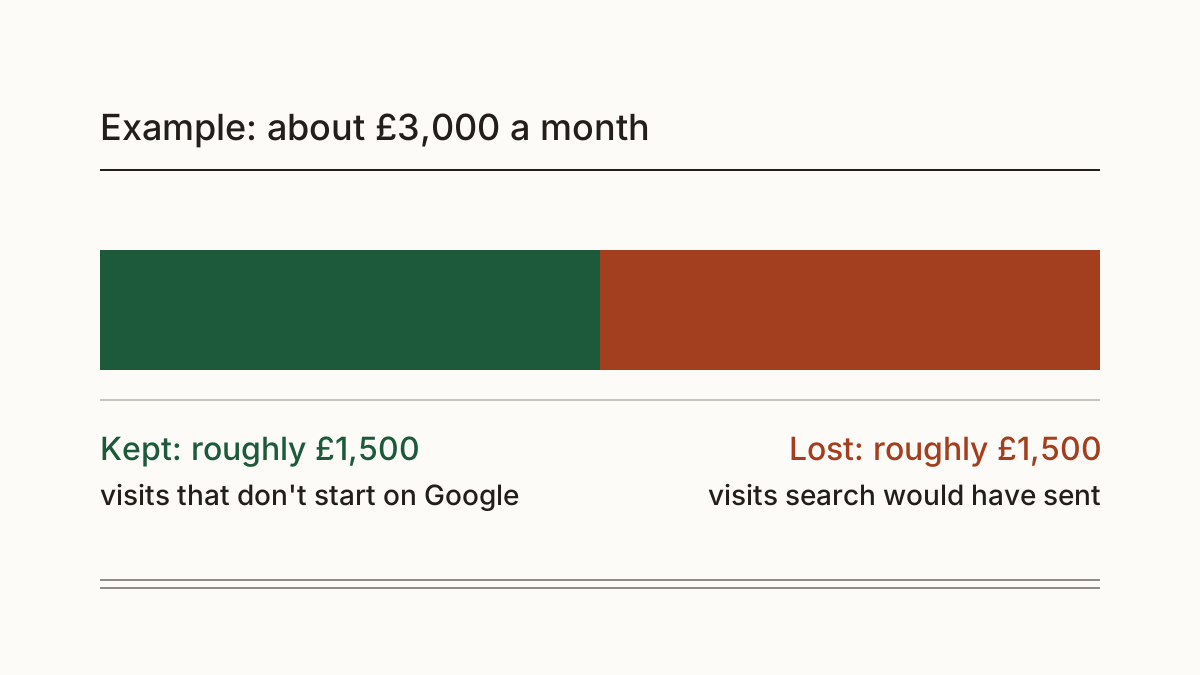
Take a restaurant on the starting figures our method page publishes: 1,800 visits a month, 3.5% of visitors becoming customers, and £48 a customer. That's about 63 customers, roughly £3,000 a month coming through the website. Now suppose, as an example, that half those visits started with a search. With your website not showing on Google, that half stops arriving, so you lose roughly £1,500 a month. Our report is more cautious: it prices a site that has asked not to be listed at 28% of what the site brings in, about £700 a month on these figures. The smaller gaps cost less. On these figures our report puts missing business details at about £35 a month. You can see how we price traffic that never arrives, with the reason beside each figure.
Who removes the block, and what to send them
The WordPress box is yours to untick today. The robots.txt rule and the structured data go to your web developer, and each is minutes of their time. A message like this does the job: "Our site seems to be hidden from Google by a noindex tag or a rule in robots.txt. Could you remove it, and add structured data with our address and opening hours?" Google takes a while to come back and list you after the fix, and nobody honest will give you a date. Before you send it, scan your website so you know which block you've actually got.
FAQ
Does blocking GPTBot keep me out of ChatGPT?
No. OpenAI treats its training crawler and its search crawler separately, so a GPTBot block stops training and nothing else. For ChatGPT's search answers, OAI-SearchBot is the one that has to be let in.
Can I check for a noindex tag myself?
Yes, in a couple of minutes. Open the page and view its source, then search it for "noindex". A scan does the same and reads your robots.txt as well, which saves you reading code.
Will removing the block put me at the top of Google?
No, it only lets your pages be listed again. Where they rank depends on your competition and your reviews, things a scan from outside can't see.
Check your website with us and see what each problem costs you a month.