You've run a check on your site and the report is open on the counter. There's a big C at the top and forty findings underneath, half of them in red. Your web developer has emailed to ask which one to start on, and you've no idea. A letter can't answer that.
At Cents Security we don't grade sites. We price each problem in pounds lost per month and show the maths behind every figure, then put the list in order of money. Here's how to read a price like that, and what to do with a report that hasn't got one.
A grade can't tell you what to fix first
Two findings can carry the same "high" label and cost you very different amounts. Picture a missing security header on a brochure site next to a booking form that Chrome marks as not secure. Both might be called high. The first costs you close to nothing, while the second sends patients to the clinic down the road.
So in a list ordered by money, a cheap "critical" can sit below an expensive "medium". That's on purpose. A website security score adds the labels up, and we'd rather you see which line takes the most out of your month. Because the sums are the same for every site, you can also compare your site with a competitor's and see which one loses more.
What one price is made of
Every figure is built from a few inputs you can read and argue with. We'll walk one finding through with round figures. Treat them as an example, not your numbers. The inputs and where each one comes from are on the page that explains how we work out the numbers.
Problems that lose you visitors every month
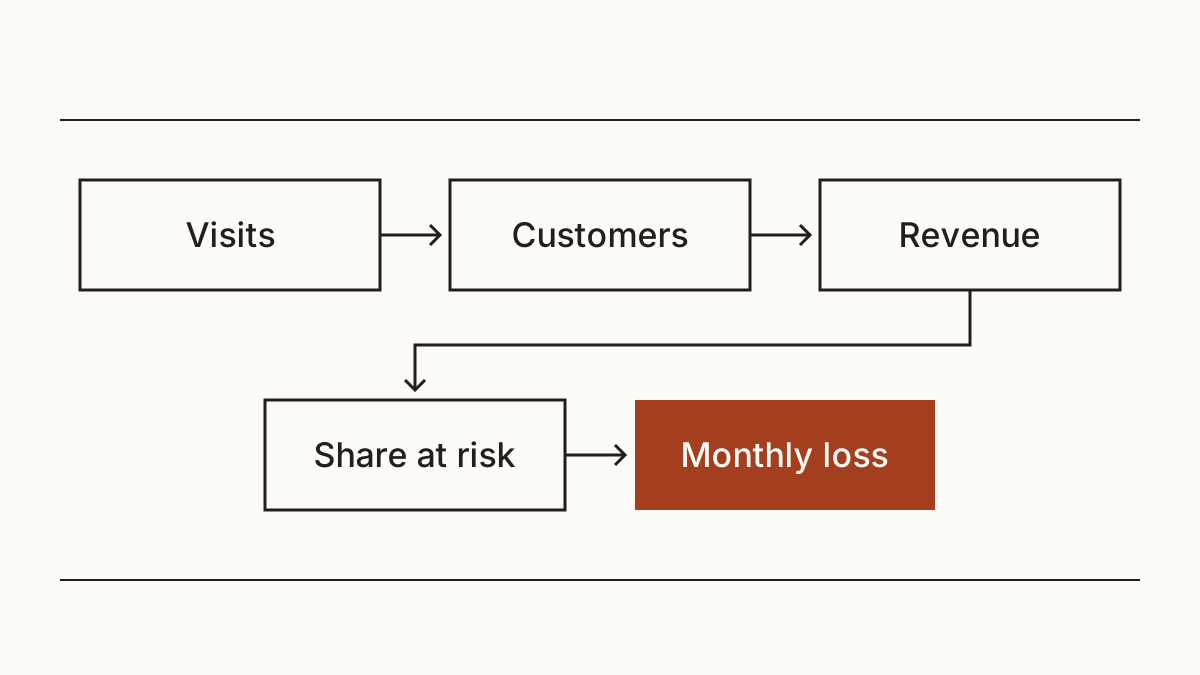
Say your site gets 2,000 visits a month. If 2% of them book or buy, that's 40 customers. At £50 a customer on average, the site brings in about £2,000 a month.
Now the problem. Take a contact page with a browser warning on it. Our method page gives the share of revenue a warning like that puts at risk, with the reason beside it. For a form the browser warns on we use 12%, so the monthly loss would be roughly £240. Change your conversion rate or your average order value and the figure moves with it.
Problems that might happen once a year, or never
Some risks don't bill you monthly at all. Somebody might send your customers an invoice from your own domain, and that may never happen. For risks like this we take what such an event typically costs a small business and multiply it by the chance of it happening in a year. Then we divide by twelve.
That's why a rare, expensive risk shows a small monthly figure. It isn't a forecast that it happens every month. Nor is it a promise that it won't happen next week, which is why the finding still names the fix and who makes it.
Every price is a range, and a guess gets a wider one
You won't see one bare number from us. Each finding shows a low, a likely and a high figure. When the evidence is solid the range is narrow; when we're less sure it widens, and we'd rather show you the guess than hide it.
Where we have to judge a share, we lean low. Our method page puts it plainly: we'd rather be low than high.
Your own figures make the price yours
Until you tell us otherwise, the starting figures are typical for your kind of business. A cafe gets cafe numbers. A dental practice gets dental ones, kept modest on purpose, and a price built on typical figures is marked down until you correct them.
Open your business profile and type in your real visits and order value. The prices change as you type. Most owners know these roughly from the till or the booking system, and roughly is enough.
Why the total is less than the lines added up
One lost visitor is counted once. A site with no HTTPS fails several related checks too, and each of them would lose the same person at the same warning. We price every line, but only the most expensive one in each overlap goes toward the total. The rest are marked as already counted.
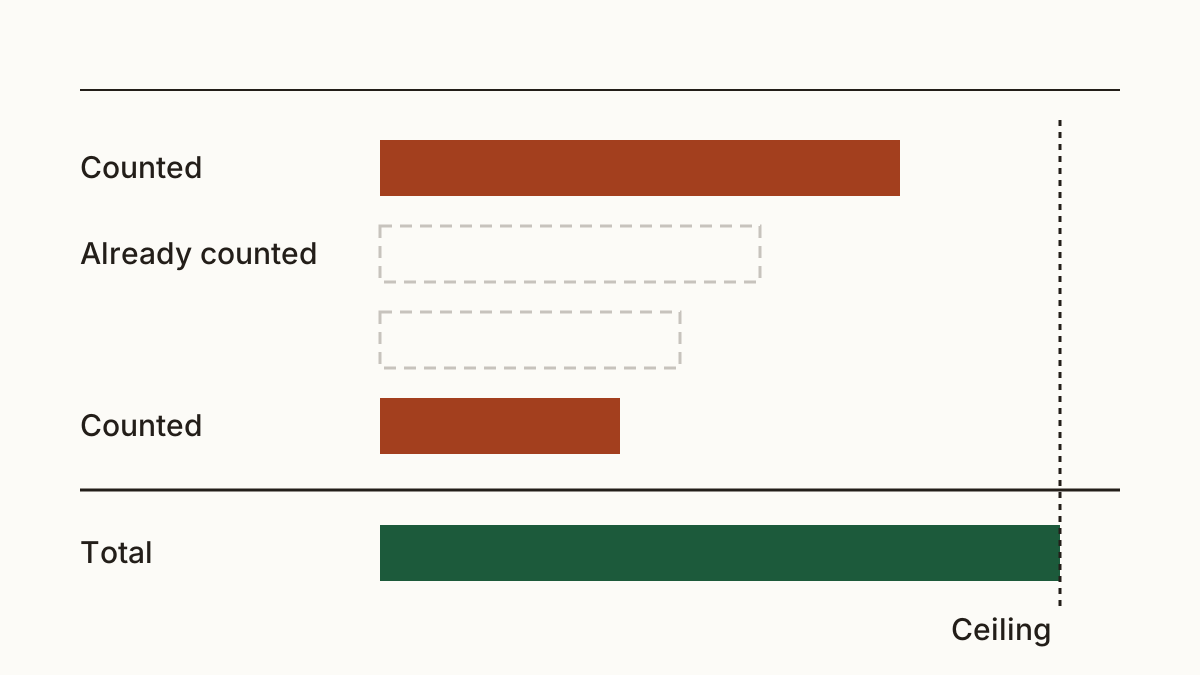
The problems that cost you visitors are also capped together at a share of your monthly revenue. So the bill never claims you lose more than the site brings in. A report that does claim that tends to end up in the bin, and fairly so.
Reading a website audit report that has no prices
You may already have a website audit report from an agency or a plugin, or the results of a free website health check. You can still put it in order yourself. Go down it line by line and ask who this costs you and roughly how much. Then ask who fixes it.
A missing page title costs you search visitors every month. An open admin login costs you nothing until somebody gets in, and then it costs a lot. Pencil a rough figure next to each line, even a wide one, and the top of the list sorts itself out. Don't count findings, though. Forty small lines can matter less than one big one.
Fix the top line first, and send it to the person named on it
Every finding we report names who fixes it, whether that's you or your web developer. The most expensive one comes with a message written for that person, so you can forward it without translating anything, and Business adds the message for every line.
Start with the line at the top. Once it's fixed, scan your website again and watch that line come off the bill. Then move down to the next one.
FAQ
Why don't you give my website a score?
Because a grade invites an argument and a figure sets an order. A C tells you something's wrong. £200 a month on one line tells you where to start this week.
Can a website security score say my site is safe?
No. Nobody can promise that from outside a website. What we can do is say what we checked and what we found, and our checks page lists every one of them.
Where do the figures come from?
From typical figures for your kind of business, our own judgement of what each problem puts at risk, and published research where there is some. Our method page lists every input with its reason or its source, so you're free to check the working and tell us we're wrong.
Check your website with us and see what each problem costs you a month.