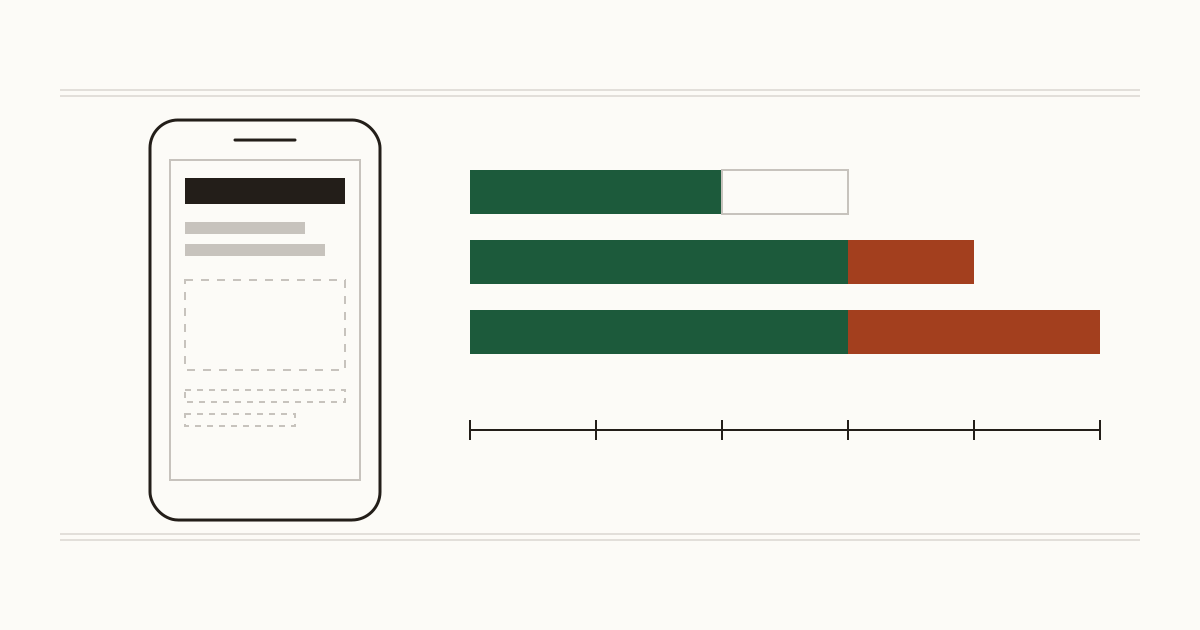
Someone's at a bus stop with two bars of phone signal. They've tapped your link from a search, and the screen stays white. Four seconds in, there's still no price list. So they go back and tap the next result. You never hear about it, because a visitor who leaves before the page appears doesn't ring to complain, and your analytics may not even count them.
At Cents Security we check a business website from the outside and price each problem in pounds lost a month, with the sums shown. Speed comes up on a lot of the small business sites we scan. The good news is that the usual causes are cheap to fix once somebody knows which one it is.
What a slow website costs you each month
Deloitte's 2020 study for Google, Milliseconds Make Millions, found that a mobile site 0.1 seconds faster lifted retail conversions by 8.4%. Our report is far more cautious than that, on purpose, because we'd rather show you a dull number you believe than a dramatic one you don't.
Here's an example with round figures. They aren't your numbers. A trades business starts at about 1,100 visits a month, with 4% of them turning into a job worth around £320. That's 44 jobs a month from the site. Our report prices a server that takes more than 0.8 seconds to start answering at under 1% of that, about £100 a month on these figures, and one that takes more than 2 seconds at about £200.
For a plumber or an electrician, the visitors who give up are often the urgent jobs, the ones where the customer rings whoever answers first. Correct the visits or the conversion rate for your own business and the figure moves with them. You can read how we work out each figure and tell us if you think we've got it wrong.
How to tell if your site is slow
Don't test it at your desk. Office wifi flatters everything, and so does a laptop that's opened your site a hundred times before. Pick up your own phone, switch wifi off, and load your home page on mobile data. Count until you can read something useful, like the menu or a phone number.
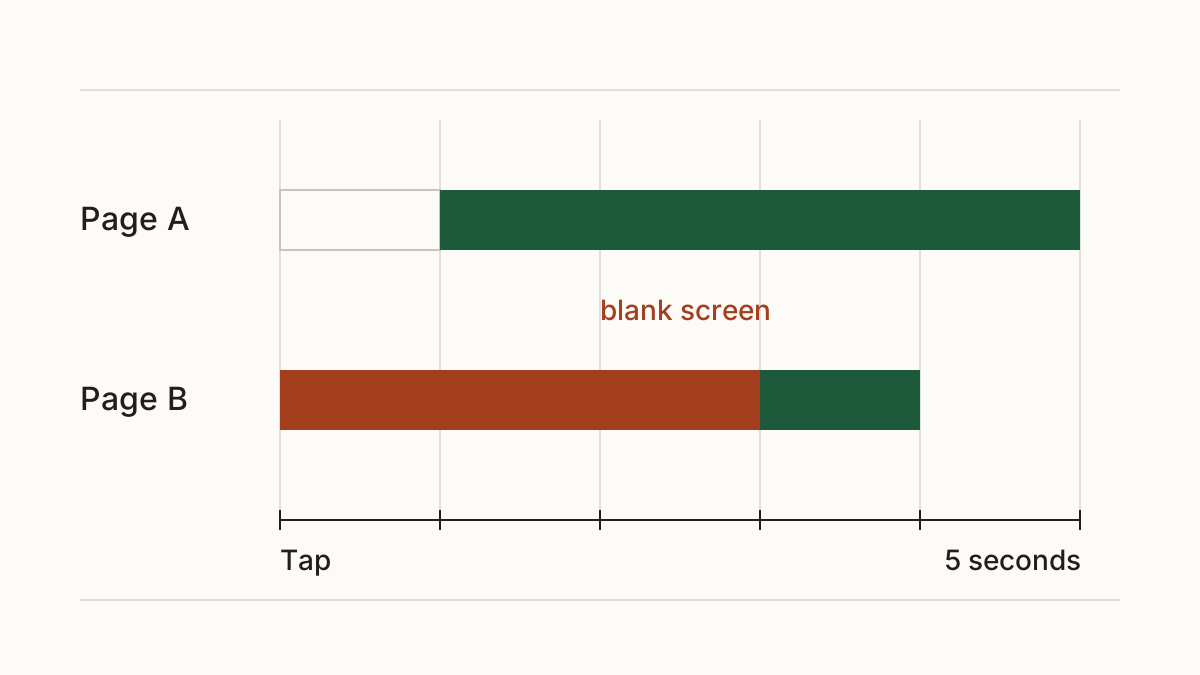
A website speed test gives you a page load time, and that number is handy for comparing before and after a fix. Write it down. But the page load time measures when the last file arrives, and your customer doesn't wait for the last file. We care more about when the first useful thing appears. A page that shows your opening hours at one second and finishes at five is in better shape than one that's blank until three.
If you look after several sites, try it at a busy hour too. A cheap shared server that's fine at 10pm can crawl at lunchtime.
The usual causes, and who fixes each
Most slow sites we look at have one or two of the faults below, rarely all of them. You don't need to understand the technical side to get them fixed: you need to know which one you've got and who to send it to. The full list of the speed checks we run is on our site, in plain words.
The server takes too long to answer
Before anything appears, the browser waits for your server to reply. When that first reply takes a second or more, everything after it starts late, and no amount of tidying the page will make up for it. The technical name is a slow first byte. Your hosting company or whoever built the site fixes it, often by changing a plan or a setting, sometimes by moving host.
Pictures far bigger than the screen
A photo straight off a camera can weigh more than the rest of the page put together, and a phone shows it at a fraction of that size. It's a common cause on sites that owners built themselves. Whoever uploads the images fixes this one: resize them before they go up.
Too many scripts from other companies
Chat widgets and trackers each load code from someone else's server, and so does an embedded map. Each one adds a wait. Whoever added them should remove the ones nobody uses, and you're the best judge of which those are.
Nothing is compressed or cached
Without compression, files travel at full size. Without caching, a returning visitor downloads everything again on every visit. It's usually one setting at the host. Your developer can switch both on in a few minutes.
Fix the slowest thing first
Order the work by money, not by how technical it sounds. A heavy photo on a mobile page can cost more than an obscure server setting, and it's quicker to sort out. We put each finding in order of pounds lost, with the name of whoever does the fix, and the top one comes with a message you can forward to them.
Send your developer the top line and wait for the fix. Once it's done, check your website again and see whether that line has gone. Then move on to the next one. It's slower than asking for everything at once, but you'll know which change made the difference.
FAQ
Does page speed affect where I appear on Google?
A little. Google's own documentation treats page experience as one signal among many, and relevant content still counts for more. A slow website mostly costs you the visitors who did arrive.
Is my phone the right test?
Yes. StatCounter puts phones at about 60% of web page views worldwide, so your phone on mobile data is closer to what customers see than a laptop on the office line.
Will a faster host fix it?
Only when the server is the slow part. If the page is weighed down by huge images or a pile of scripts, a new host won't change much. We'd check what's slow before paying for a move.
Check your website with us and see what each problem costs you a month.